
Life after Love?
Last quarter 2025, scorpio season, the handless maiden, serial monogamy, reading old diaries, the only way out being Through, God, looking at the moon looking back at me

This essay is just over 5000 words long and is divided into four sections, loosely aligned with the four sections of the ancient tale, The Handless Maiden.
Over the mountain, over the sea,
Back where my heart is longing to be,
Please let the light that shines on me
Shine on the one I love.I see the moon; the moon sees me
Down through the leaves of the old oak tree.
Please let the light that shines on me
Shine on the one I love.I see the Moon and the Moon sees me (nursery rhyme, circa 1784)
October-November, morning light stains my bedroom yellow, becomes long and stretchy and warm again. On the 19th, the new moon joins the sun, mars, venus, and mercury retrograde all in Scorpio. Four other planets in retrograde, just in time to take us back, to reveal what is hidden. Time turns slippery, like river rocks, and I am running in reverse. In and in and in back toward myself. Scorpio season, secrets, desires, hard truths, birth, death, redemption. It’s that time of the year again where I take my soul out from the back of my underwear draw. Scorpio, my moon sign - ruled by the planets named after the Roman Gods of war and death, never goes easy on me. Cancer, also a water sign, is the actual sign of the moon; sensitive, nurturing and emotional. But I tend to think of Scorpio as the moon lit up from behind like a chicken’s egg, projecting the twisted red embryo of a scorpion, turning around into itself. Birth and death and birth and death and birth and death, the ouroboros. As October turns to November I turn on the red light. Single, again, for the first time in a million years, I drive home for my next hospital placement, find a stack of my old diaries from ages 19-24, and spend the end of November spinning back to myself. I let go of the idea of coming out clean. The only way is through.
Part 1 - The Maiden loses her hands
In the tale of the handless maiden, or ‘the girl without hands’, a miller is tricked into selling his daughter to the devil in exchange for unimaginable riches. When the devil comes to collect, three years later, the young maiden has kept her hands clean of sin, so the devil is unable to take her. Threatening to take him instead, the Devil convinces the miller to cut off her hands. She agrees to this - she does not want her father to be taken from her. However, once her father takes her hands she cannot help but weep, she weeps and weeps and weeps onto the stumps where once her hands were, and all these tears wash her wounds clean, form a protective circle around her, and the devil still cannot take her.
Launceston, November 2018. Almost exactly seven years before I will begin practicing in this very hospital as a student nurse, I watch my maternal grandmother die in it. I have such a bad phobia of hospitals and hospital toilets and getting sick that I hold my pee for almost entire twelve-hour shifts, watching her die. She becomes feverish with a UTI, so do I. This feels right, like just cost for loving her so much, of having come from a body that came from her body. I watch her toss and turn and writhe, distressed, half in that other place I don’t understand and can’t join her in. The only night in the hospital I spend with her alone I crawl into her bed and lay my head on her chest, like I had a thousand times before, when I was tiny and cold and needed her. At twenty I need her this way still. Vaguely aware I am causing her pain, and that she’d forgive me if she could, I whisper to her the song she’d sung my sisters and I to sleep with - I see the moon, the moon sees me. A day later, in a rush to get back to her at 5am, to be there when she passed, I crash my mother’s car into a brick fence. Whiplashed, my sister screaming from the passenger seat, Addy Addy Addy, the car alarm waking up our neighbours, now standing watch in dressing gowns on their front lawns, I lean into the windshield in search of the moon and when I see it I know that any part of Nan worth witnessing is gone now or would be soon enough. That there is no rush, no rush. A day later still I watched my mother throw up at the sight of her mother, dead. I watched my older sister fall to her knees, crying, begging for things to be different. Women in my family love to spill, to leak, to cry, to bleed. Our teenage years were damp. Not me, I was always holding my bladder, holding everything in. I was dry. I delivered Nan’s eulogy without spilling a tear and flew back to Melbourne as soon as I could. By this point every time I peed I felt a little dizzy. I would hang my head between my knees and press my palms against the cool tile. I know / not these my hands / and yet I think there was / a woman like me once had hands / like these1. I did not go to the doctor when I began pissing blood. I did not go when pissing felt like passing razor blades, when the pain swelled up behind my eyes. I did not go when I could only abate the fevers by lying in an ice cold bath all afternoon in my underwear. I had no reason for this, except that I enjoyed it, that it felt right. I was sitting shiva the only way I knew how. I became concerned only when my back ached and my body began to turn the bath water warm like a hot stone. By then the infection was in my kidneys. In Traditional Chinese Medicine the kidneys store, secrete and transform our essence, our life force, our Qi. My maternal line, my lifeline, had just been severed. I now had a mother who was motherless and I had watched it happen, watched it transform us. I had no words for this, no tears, no pee. In the end, I got out of the bath and I went to the conventional hospital and I took the antibiotics and I finally cried, restored my Qi, and eventually, my piss ran clear again. The only way is through.
At twenty I was full of questions. Where does love come from in the first place? Do we have a finite amount of it, like energy? Did my grandmother gift hers to me at birth, a grand inheritance, something to carry on with after she was gone? She gave me her slim build and wonky jaw and long slender hands and all this love. Little Brown Mouse, Little Brown Mouse, Little Brown Mouse, that’s what she’d call me, whispering it to me like a prayer. She was the only religious person I knew. Following my father’s suicide, his refusal to keep living after love, his deal with the devil, his selling off of my hands, she was the only person I felt had no complicated feelings about us, his offspring. She was unique in that she looked at my sisters and I with no pity or sadness or fear and she was the only person I have ever know who had in their pure sacred heart, only love. She was an oasis. She was the feeling of waking up in the afternoon with the sun on your face. After the only argument we ever had, in which she tried to convince me not to travel overseas, she wrote to me, with big, shaky letters from blind hands, what you said to me, she wrote, was unkind. I have loved you every day of your life. And she did, she did! And then she was gone. And the love she had for me and I for her had no where to go, so it went inward, to my bladder and then my kidneys, straight to my Qi. I tried to sweat it out and failed. I tried to cry it out and failed. I could not simply discard it, forget, move forward. I had to carry it with me. The only way is through.
My diary entires from the time of my grandmother’s death are scattered, infrequent. On the 24th of November, exactly seven years before I will start working as a student nurse in that very hospital, I write from it, devoting an entire page to Nan’s nipples. She tosses and turns, tears her clothing off, exposing breasts (and nipples) I’d never seen before. I am scandalised, crying, begging her to keep her clothes on. This is when both of our UTI’s become feverish, the night we spend alone together. I do not sleep. I write of the way the body shrivels up in its march towards death, becomes hollow like an abandoned house, with useless nipples, no life left to suck from them. In the 12 months after she dies I document a slow tumble into the madness, the obsession with death, that dominated the rest of my early twenties. I begin by writing in a kind of mania, ‘I see her everywhere’, about butterflies and dragonflies trapped in train stations that remind me of her. It’s as if I am just wandering around Melbourne, dismembered, bleeding out. Then in my grief I begin to write of the sickening feeling that I did not love her well enough, of guilt and dread, of being constantly tired. I put myself in her shoes in a perversion of empathy that was almost pathological - I was gripped again and again of visions of how she spent the last years of her life, staring out a window at trees, barely seeing them, lost in her thoughts, and I felt I was her. I write mostly of writing myself in circles and yet not coming any closer to understanding death. I write of my certainty that I will feel this way forever. Every feeling state I wrote of prior to about twenty-three I treated as permanent, like a child ushered into a room by a parent, then promptly left, who now believes they will live there forever. I felt incapable of opening the door and just walking into the next room, incapable of believing the door would open, that there would be a door at all. I just sat in the pain of it all. Not knowing yet, of course, that the only way is through.
Pt 2 - The Maiden marries the King
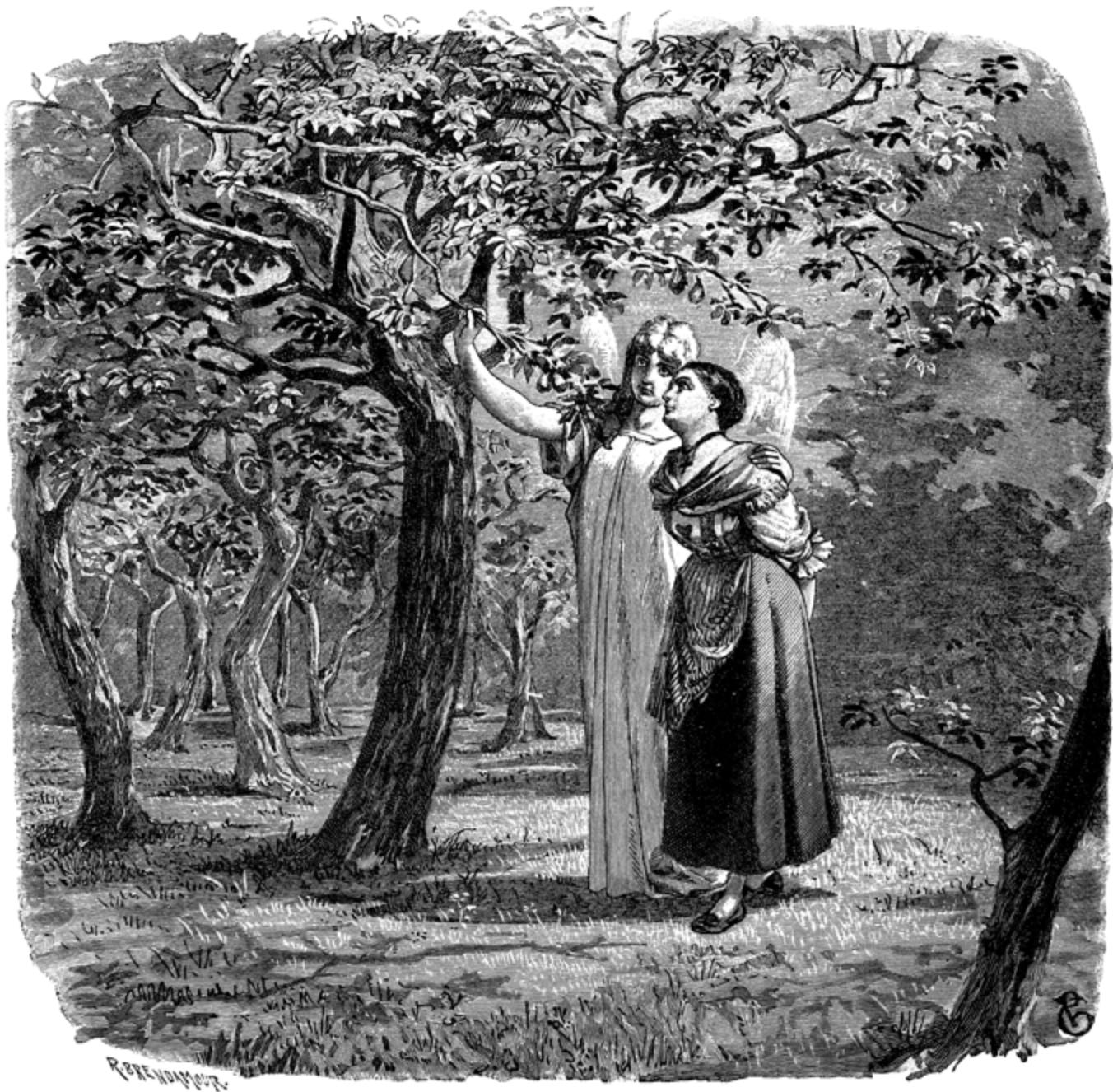
Despite her family’s new wealth, the maiden decides to leave. She wanders into the wilderness alone, without hands. She cannot fend for herself without agency, without hands, so she relies on prayer, on charity. She sees fruit trees behind a garden wall and she prays for entry and an angel comes down from heaven to help her, to open the gate and bend the boughs of pear trees so that she might only have to raise her head to eat. She catches the eye of the King, wandering like a beautiful apparition in his orchard, trees seemingly bending to her will. Fragile and delicate and ghostly and handless. He asks her if she is a spirit and she answers him no, but that she has been abandoned by everyone but God. He tells her he will not abandon her. He has new hands crafted from silver, and soon they wed and one day while he is away in battle, she gives birth to his son.
Paris, September 2022. I fly across the world to meet up with my ex-boyfriend. Paris is the sort of place to do that sort of thing if one is so inclined. It’s a consequence-less liminal space for falling in and out of love. We had been broken up for two months when we drag our worn and beaten down hearts, split in half like a cheap silver necklace, to Jesus’s Sacred Heart, the Sacré-Cœur Basilica. Growing up I thought of Jesus, Mary and Joseph loosely as close friends of my maternal grandmother, of Nan’s, so I was always happy to see them again. The love of my life (until then) had some New-Athiest-esque ideas about the role of prayer as a secular gratitude practice and so we took our turn with the other devotees and tourists, down on our knees right at the front. I knelt, mostly, because he suggested it. I was always doing things out of love for him, for the only person I’d ever worshipped. But then I felt God. Down on my knees in the Sacré-Cœur, attempting to engage in a pop-psychology gratitude practice, I felt, what I can only describe in these few useless, feeble, human words, as God. How could I describe such a thing? Many before me and much better have tried and failed. I knelt and I told Him I was grateful, for everything, for all of it, even the hard parts, and in return I felt her, what was left of my grandmother, and knew she was with Him now, split into a billion pieces like particles of light and all around me still. I felt for the first time that things had not only been hard, but beautiful. That I had already lived such a beautiful life. ‘And I think if I believed in God, I wouldn’t want to prostrate myself before him and ask for forgiveness. I would just want to thank him every day, for everything.’2 Many think the first step towards God is self flagellation, is prostration, but the only way I know God is the way my Grandmother knew God, is the way she loved me. Is love. Is thank you. There was no before or after her love, there is only through.
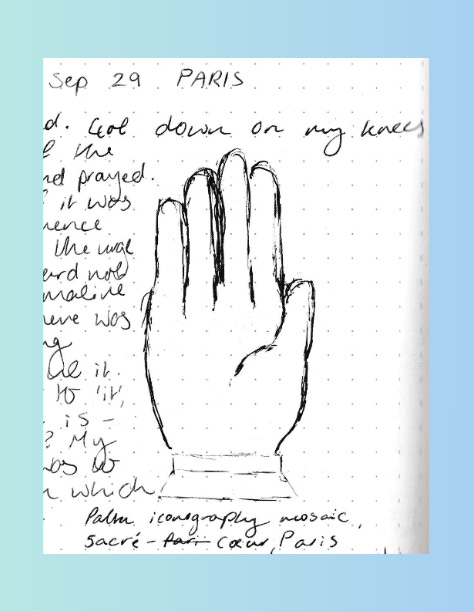
The day we went to the Sacré-Cœur, in the little black soft cover Moleskin I’d taken travelling with me I wrote of feeling closer to ‘it - whatever that is - consciousness?’ I wrote of how feeling grateful for my family tumbled into feelings of gratitude towards my ex-boyfriend, and other ex-boyfriends before him, and everyone with whom I’d ever shared experienced reciprocal love. I wrote too, of how when I’d opened my eyes in the Sacré-Cœur they landed on a mosaic of an open palm, of a hand, and that it glowed. I drew this, as best I could. I wrote of this as my most important and sacred inheritance - Nan’s hands, and by giving them to me, my mother had been able to possess them somehow, herself. For the first time, I wrote of my desire to have a child, a daughter, to pass on something of Mum. I felt desperately that my maternal line had to continue, out of shear love for it. Weeks later, I wrote of my hands as if they were covered in blood. I wrote the word ‘sin’ for the first time in my life - wondering if Nan would be proud of what I had done with ‘her’ hands, with the men I’d touched, with the things I’d written, with the life I’d lead. But shortly after I stopped writing of her at all. The pain had been taken out of her death. I can’t bring myself to feel sad about it even now. I felt it and I felt it all, all the ugly parts, and then I felt grateful, and then I felt her and then Him and then He took the pain away. God is grace, God is love. The only way is through.
Part 3 - The Maiden descends into hell for seven years
A letter is sent to the King to inform him of his new son. But the devil has come back - a debt has to be paid. While the messenger sleeps the letter is changed to inform the King that the handless Queen has given birth to a changeling. The King responds that he loves her, that he will love his son regardless. Once again the messenger stops by the river to sleep and the devil changes the letter to inform the King’s mother to kill the Queen and the child. The letter asks for her heart, as proof. Horrified, the King’s mother kills a deer and takes its heart and tells the Queen to flee with her newborn son, back into the wilderness. Abandoned by everyone but God once again, she prays, and an Angel descends and leads her to a hut, where she lives alone with only her son, for seven years.
One might think that feeling ‘it - collective consciousness?’ and the spirit of my maternal grandmother would lead to a profound religious awakening, but one would be wrong. That came much later. Moonlight, that’s what the name of the man I gave up for God meant. It was actually a woman’s name. The first time he told me that I wrote in my diary ‘Is this the type of thing I’ll think means something when we’re done here?’. I see the moon. The moon sees me. And then I don’t, and he doesn’t. We part ways in Barcelona and I come back home to Melbourne during yet another catalytic Scorpio season and I do what I always do when I don’t want to think about something difficult or hard (like what to do with my life, my recent breakup, God etc.) and I fall in love. When I was in love with ‘Moonlight’ I wrote incessantly about my need to separate myself from his love for me, of suffocating in ‘perfect moments’, of the terror of having to live without him one day, after being so seen. I wrote of being a girlfriend as a ‘performance’ I rehearsed for in my spare time, of designing my life around him, around how much he loved me. I felt his light on me and I was so so so scared of being in the dark again. After I came back from Europe I wrote of crying at the realisation that I could not simply visit our life together like one might ‘visit a childhood home’. And then on Halloween, the zenith of Scorpio season, on the dance floor, dressed somewhat tastelessly as a sexy devil cowboy, I met someone else. Someone inconsequential who became the object of my every desire, the man of my consequences. ‘I like to think of him,’ I write, ‘every time I miss (Moonlight)’. I didn’t want to sit in the room, sit with myself long enough to gain the key to open the door, so I opened the window.
A consistent pattern across my diaries is that every time I avoid feeling something difficult or especially painful, I get sick, really, really, sick. I do not seem to have any recognition of this pattern at the time. During a period in 2022 I come to my diary mostly to write that I have been avoiding coming to write in my diary. I write in rushed, scrawled letters, as if I am hiding the writing from myself, about difficulties in my relationship - the realisation I do not want to face that it will end, that I will have to live beyond it, my fear that there will be no life worth living after love. On the next page I write of a flare up of my immune system condition that lights my skin on fire from my ankles to my clavicles, cracks overnight and each morning I wake from nightmares ‘in bloodstained sheets’. After that relationship ends I feel manically good, rushed to move on with my life, and I get a flare up of what I now know to be glandular fever, so severe the lymph node behind my right ear becomes engorged and I have to get it checked for cancer. Reiki healing helped but it’s never fully gone down, with no medical answers I carry it with me still, I run my fingers over it when I think of him, and us, and Paris. There was no before or after his love, only through. A year later I go to Asia with my best friend to avoid quitting my job, leaving my sharehouse, changing my life, and I feel so nauseous every day I become convinced I have cholecystitis, like my mother did at the same age. I don’t connect these things at the time, do not connect my kidney infection to my grandmother’s death. And I am trapped in this pattern in some way still - during the last year of my recent relationship, with L, I experienced debilitating abdominal pain. I got ultrasounds and consulted doctors and Chinese Medicine practitioners, to no avail. Jung speaks of this, of the denial of ourselves, how it can manifest in physical symptoms. After we broke up this August I had no more pain but also no tears, I ran dry again. I smoked a cigarette and drove to my sisters and she said ‘you seem fine,’ and I did. I went on holiday. And then I got glandular fever again, and I had to meditate every day to heal myself, and eventually when I would meditate I would just weep. And with all the tears it seemed I washed my hands clean, became well, came out the other side. The only way is through.
In my diary, after my nan died and my mother walked her body to the morgue, I wrote of being tasked with taking my grandfather to get morning tea. We sat under the the fluorescent lights of the hospital cafeteria at a little plastic table and he told me he understood this part. That there were arrangements to be made. People to call, a funeral to attend. Tasks. Jobs. But what comes next? What comes after love? They had been married for almost three times my life span. What could I possibly tell him? I was twenty. Almost exactly four years later, another tumultuous November-December, I will watch him take his last breath. Nothing came after love for him except a slow decent towards death. He went bitter with it - with losing Nan. He always seemed angry rather than sad. He aged so rapidly he became almost unrecognisable. He stiffened, shrunk, made himself small. I write in my diary a lot between ages 19-23 about ‘making myself small with sadness’. This is what Pop did after Nan died. In the end we watched him die, all of us, over eight slow days. He became smaller and smaller and smaller except for his enormous hands, which we took turns holding in ours. What’s left of us in the end but our actions, anyway? In my diary I write in vignettes, scenes, and scattered thoughts. I write that the intimate way my uncle tends to him is one of the only times I have ever ‘seen men be beautiful’, about the realisation that it would be a mistake to think that ‘only good things can be positive’, again and again about how thin he is, so thin that we can count the staples in his heart through his skin, about how scared he seems, to die, about leaning my head against my mother’s knees as the death rattle comes on, enjoying the last moments she is an adult looking after an adult parent and I am only a child, about time shrinking to just the next breath, and then the next, about the moment he takes his last as ‘something I wish I could paint’, about my uncle pushing the sheets aside and cradling his father’s cold body like that of a stiff child’s, sobbing into his neck, about feeling truly, keenly alive in moments it seems Pop is close to death and then more so the moment he crosses, about suddenly feeling so so so young and so so so old, about my uncle pointing to his father’s melting body and saying ‘you want to be a writer? Write about this’. But what could I possibly write about? Death then birth then death then birth then death then birth? The ouroboros? If I had the words I would only write that I was uncomfortable, the whole time. That it hurt. But that when my family told me I had to come home, I came home, that everything was out of my control, and in the moment he crossed I held my breath but I did not look away and I did not get sick. I would write only, that the only way is through.
Part 4 - The maiden regains her hands
In one version of the story, and there are many - The Handless Maiden is one of the world’s oldest - the maiden, now a queen and a mother, during her retreat into ‘hell’ comes to a river where a wise old man instructs her to wrap her arms around a tree three times, after which her hands regrow. Such a thing happened to me this year in the rainforest of a little herb farm in northern Tasmania, at the base of a tree over three metres wide and 800 years old. In some versions, he instructs her to place her stumps into a river. Either way - her hands regrow. When the King, at the end of his seven year search finds her again he does not recognise her - his wife was without hands, without agency, without direction. The fragile beautiful ghost for whom the branches of pear trees bent. Their son believed his only father was God. But she has been through hell and wants to return to him now, and so she retrieves the silver hands he once gave to her and presents them to him as proof, here she says, I am changed, I am full, but I am still yours.
When I met ‘Moonlight’, only a few months after the end of another relationship during a time I wanted to be alone, a moment of clarity brought me to write ‘all I know, is that I will always choose love, no matter how difficult.’ The unrequited ‘love’ I felt for the man I met on Halloween became twisted, dark, controlling, the moment he no longer wanted me. It required no personal sacrifice. It was the kind of unrequited love that was only reaching, dragging, scratching my claws down walls, circling around myself with nowhere to go. Definitionally, it wasn’t real love because nothing good came out of it. It made me a worse daughter and a worse friend and a worse person. I wrote during this time of wanting ‘to be outside of myself’, of ‘needing an oasis for my thoughts to return to,’ a false paradise that quickly becomes the source of my near-constant suffering, I wrote of thinking of him almost every minute of every day, of feeling ‘sick’ over it. Constantly sick. I was sick, still, when I met L. Like I had been churned through a washing machine. And he was so sweet, so easy to love. Letting him go was the hardest decision God has every expected me to make. A month ago, when I saw him off on the boat he came to me on I thanked him for looking after me when what I actually meant was, thank you for loving me, it left me changed, and he winked and told me he loved every minute of it, when what he really meant was - I love you still and will for a long time. And unlike the sickness and pain in my belly the whole time we were together, all this pain felt good, felt right, felt just. I loved him best by leaving him - the least selfish thing I did in our entire relationship. ‘No one has ever seen God; but if we love one another, God lives in us and his love is made complete in us.’3 The paradox of love, real love, love returned, is that it takes you outside of yourself and closer to yourself at once. That is God. You have nowhere to hide, and the only way is through.
At twenty, I was cognisant I carried the responsibility of looking so much like her, and I wrote in Nan’s eulogy about my hands, her hands, about carrying her with me, about hoping to be ‘at least half as kind as she was’. But if I were to write it now I would write that I hope to love at least as half as much as she did. That’s all we have in the end anyway, and our hands, the things we do with the love we experience, the way we choose to act on it, the story we can write about it. Alchemy. Some time this December, creeping up on me in a way it never has before, a hint of the possibility of love blooms. This time, for the first time in my life, I am not looking for it. I am almost six months celibate. I am full, look Mum I have my hands! I love my life and I am not running, not closing my eyes. But love can come for you when your arms are full. At first, I see it in the corner of my eye like the rainbow scales of a trout surfacing. I’m curious, I can’t help myself. I wade into the muddy water and stare into the pool, see my reflection looking back at me, and the face of love and the fish slipping from my grip, always just out of reach. I begin chasing it a little, this thing I’m not sure I want, squinting, trying to figure out if it is what I think it might be. This little chase defines my December, transforms me briefly into someone else, brings me spinning back to myself, touches on something raw and new. I completely surrender. I lose weight pacing my house, not eating, not sleeping, thinking of him. I let it totally take me over, a kind of passion I’ve never felt before. During one of our long long long text conversations he messages me - I wish you were here, looking at the moon with me. Then, on Christmas day, on the day Christ was born for us, I sneak into my sister’s bedroom to take a nap, full of lamb and cheesecake and white wine, and I wake to her infant son’s feet kicking at my face. ‘I’m sorry’, she says, ‘I have to feed him.’ ‘I love you,’ I whisper in answer, waking from my half-dream of him, the fish, ‘she probably means you,’ she says to her baby. ‘I didn’t’, I say, ‘I was talking to you’, and I kiss her baby’s tiny toes while she breastfeeds him, and she brushes my hair from my face and I am in love, like a warm cocoon, like the way Nan loved us, I am in so much love. That night I let the fish swim away from me, make the decision God expects of me, the moment the message arrives, without quite knowing why. It’s a bit painful, these things always are - that’s the price. Perhaps that’s what 2025, year of the snake, is to teach me, to let go. To shed everything ill-fitting, suffocating, sickness-inducing. The Moon, that’s the Tarot card I pull days after I end things. Intuition, illusion, emotional ties, dreams, unseen depths, hidden truths, deception, mystery. On Christmas, I come home from family dinner a little drunk and I choose to wade out of the water, more alive than I was when I waded in, silt between my toes, algae up my legs and staining the hem of my nice new Christmas dress. No one gets to come out clean, after all, when the only way is through.
The paradox that becomes clear in my diaries is that the more I try to exert control over my life - what I will do with it, what narrative it follows, how much I will think about it, who is in it, who loves me, who I will love, the more out of control I feel, and the worse it gets. Justin Smith-Ruiu writes of his faith as the choice to ‘go limp’. My experience in the Sacré-Cœur did not imminently lead to a spiritual awakening because I could not sit with something I did not understand. Similar to the love I experienced with ‘Moonlight’, during which I wrote constantly about my worries over how our lives would fit together, what we would do, if he was the person I wanted, if he was enough, if I was, how it would work, if we had met too young or too old, when it would end and how. There was never a surrender, no faith that things would work out as they should. In the lead up to this year’s break up, with L, I wrote constantly about not being able to understand why he was the wrong person for me, why I was not happy. Of incessantly trying to untangle the secret of it, wondering which parts of myself I could shave away, which desires I could part with. I began having vivid nightmares in which I was complicit in my own murder. I had conversations with friends about this for months. I never figured it out, never got the whole story straight. Such a thing requires an omniscience I have no rightful access to. I know not these my hands. And then I went limp, surrendered to the overwhelming energy of it, ended it. Not so much an act of becoming passive - but rather making the decisions that life was clearly demanding. Choosing to use my hands, the hands Nan gave to me, to live a life she might be proud of. And yet I think there was. Deciding that I don’t need to know how it will end. That’s what the mystery of faith is to me, courage to act, a kind of surrender, a falling back, into love. Of only knowing, A woman like me once had hands like these. And if ever I feel scared, I just look to the moon. All I know is God is grace, God is love, and the only way is through.
I see the moon, the moon sees me,
God bless the moon and God bless me:
There’s grace in the cottage and grace in the hall;
And the grace of God is over us all.Alternate version from ‘Old Irish Folk Music and Songs’ 1909
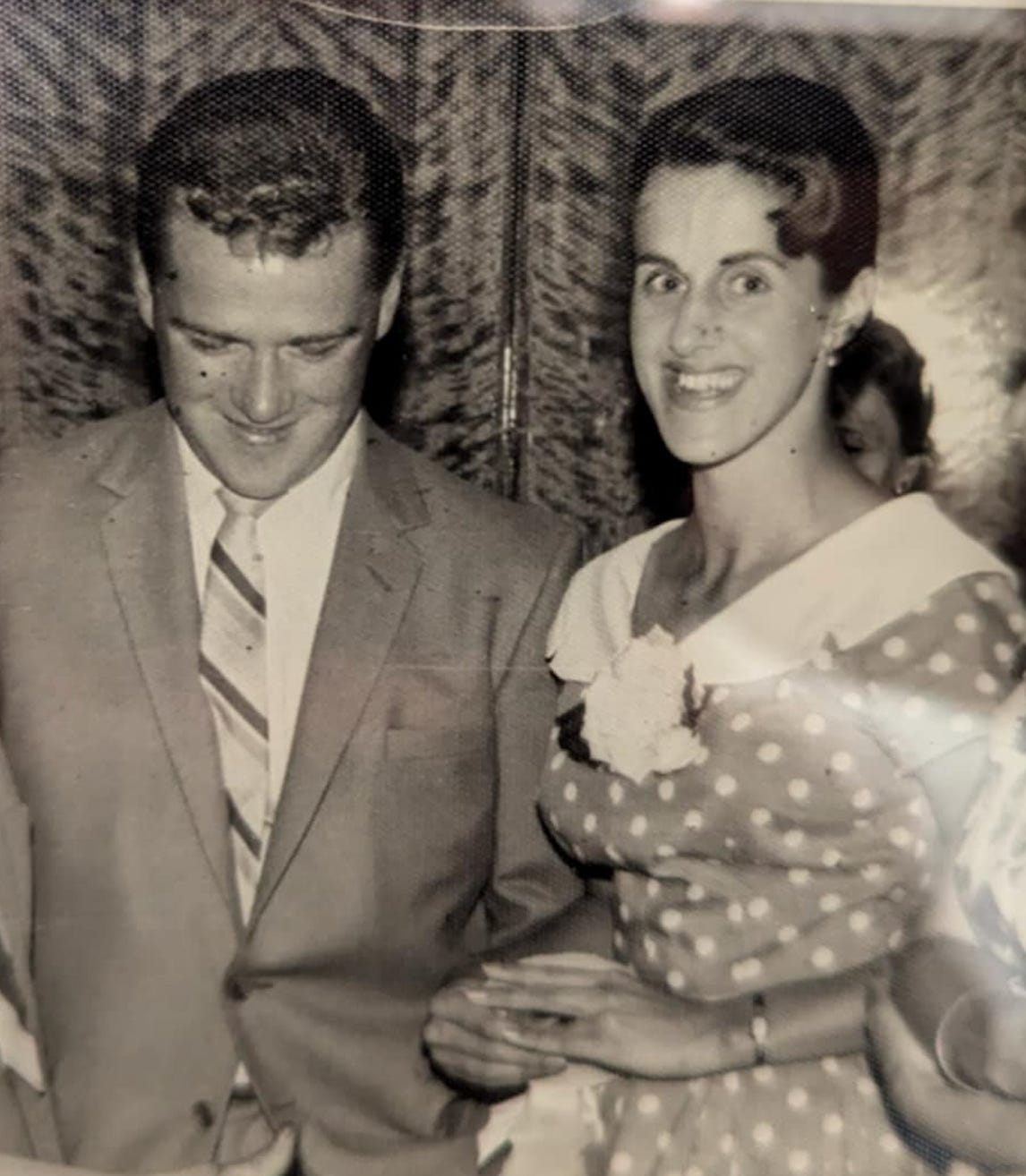
‘Amaze’ by Adelaide Crapsey, the central part of my eulogy for Nan.
Sally Rooney, Beautiful World, Where are you
1 John 4:7-12